Garden Maintenance Hainault: Recycling & Sustainability
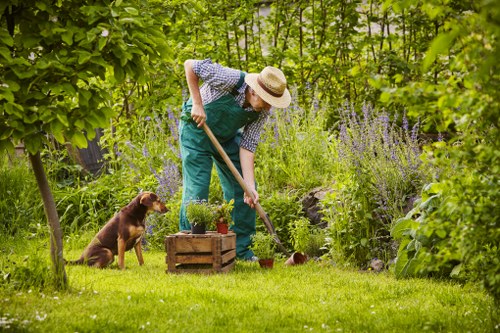 At Garden Maintenance Hainault we place sustainability at the heart of every project. Our service for local properties and communal green spaces focuses on creating an eco-friendly waste disposal area and a practical, sustainable rubbish gardening area that reduces waste, returns nutrients to soil, and cuts transport emissions. We work to integrate simple, repeatable systems on-site so customers can see immediate benefits: smaller rubbish bags, more on-site composting and better segregation for recycling or donation.
Our approach to garden care in Hainault and surrounding zones means we use a mix of traditional horticulture and modern circular practices. As a specialist in Hainault garden maintenance, we train staff to sort green waste, timber, pots and salvageable materials at source. By establishing dedicated collection points within each property we make recycling the default choice, not an extra chore. Reducing disposal to landfill and maximizing reuse is central to our work ethos.
 The team has set a clear
recycling percentage target
to guide operations: we aim for a 70% recycling rate across all garden-related waste streams within two years. That target covers green waste (grass cuttings, prunings), small woody material for chipping, and recoverable items such as planters, paving and soil that can be reused. We map each job by material flow to measure progress and report on improvements quarterly.We coordinate with local authorities so our garden services in Hainault align with borough-level waste separation rules. The local boroughs operate kerbside green-bin programmes and mixed-recycling collections; our on-site sorting complements these schemes by ensuring less contamination and higher-quality recyclable material. Where permitted we separate compostables from recyclable plastics and metals and label collections to match council expectations.
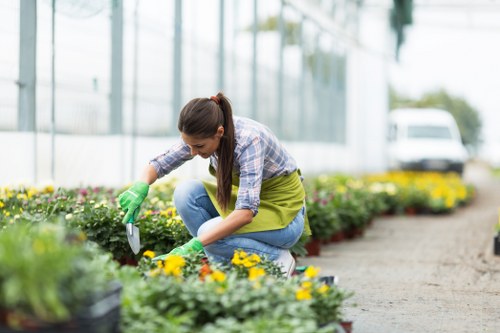 Practical measures in our sustainable rubbish gardening area include in-situ compost bays, sealed leaf-mould trenches, and wood-chipper runs to turn prunings into mulch. We partner with community allotments and local landscapers so chipped wood and leaf-mould are put back into the local soil cycle. Our fleet consists of low-emission vehicles: a mix of electric vans and Euro 6 low-emission models to minimize transport carbon.
To make the most of infrastructure, we regularly use nearby transfer stations and household recycling centres run by local councils. These transfer points accept segregated wood, green waste, soils and inert materials and provide a compliant route for items that cannot be reused. By delivering properly sorted loads we reduce the need for expensive sorting at transfer stations and improve the yield of usable materials.
Partnerships are a practical way to keep usable items in circulation. We work with local charities and community groups — including allotment associations and environmental organisations — to donate still-useful planters, tools and salvaged paving. These collaborations turn potential waste into resources for community gardens and rewilding projects. Lists of common donation and recycling activities include:
- Garden waste composted or collected separately for municipal processing
- Wood chippings and branches for mulching or biomass reuse
- Re-use of non-contaminated soil, bricks and paving for landscaping
- Collection and safe disposal of hazardous small quantities (e.g., old pesticides) at civic amenity sites
 We maintain formal arrangements with local transfer stations and multiple charity partners so that materials flow quickly from collection to reuse. Working with organisations such as regional allotment networks and local community foundations helps us deliver social as well as environmental value. Every tonne diverted from landfill supports jobs and community green spaces.
 Measurement and continual improvement are central to the Hainault garden maintenance promise. We audit each project, publish diversion figures internally and revise routes and collection points to increase efficiency. Our
low-carbon vans
and route optimisation mean fewer miles driven per job and a lower carbon footprint for rubbish collection. We also provide clients with a summary of materials diverted and advice on creating a long-term on-site eco-friendly waste disposal area that aligns with the boroughs' approach to waste separation.To summarise, the Garden Maintenance Hainault sustainability plan combines practical on-site systems, collaboration with local transfer stations and charities, and investment in a low-emission fleet to reach and exceed our recycling percentage target. By turning garden waste into compost, woodchip and reusable materials we support a circular local economy and reduce the environmental impact of routine garden upkeep.
We encourage households and landlords to adopt labelled bins, small composters and a simple sorting checklist so the garden services in Hainault we provide are matched by everyday habits that keep recyclable materials clean and useful. Small changes at source deliver better recycling outcomes across the boroughs and make sustainable garden maintenance an achievable part of every property.
Our pledge: continue improving the sustainable rubbish gardening area model, increase reuse pathways, and achieve our 70% recycling target while running an efficient, low-carbon fleet that respects Hainault's green spaces and community needs.